 English


Views: 0 Author: Site Editor Publish Time: 2026-08-22 Origin: Site


For brands and distributors, selecting the right material for a baby fruit feeder is not just a design preference. It is a critical compliance and brand-safety decision. End-users are increasingly skeptical of standard plastics. They are highly sensitive to hygiene flaws and serious choking risks. A poor material choice inevitably leads to negative online reviews. Parents often cite severe mold accumulation or dangerous material tearing as primary complaints. These failures can easily trigger devastating product recalls. This comprehensive guide breaks down the core material options available today. It highlights the critical safety parameters and thorough evaluation criteria. You need this knowledge to effectively source and customize these items. It will also help you secure a highly reliable manufacturing partner for infant feeding products.
Consumer demographics heavily influence material selection in the infant care sector. Modern parents proactively seek out non-plastic and easily sterilizable materials. This eco-conscious demographic researches product compositions rigorously before making a purchase. They actively avoid materials prone to degrading, staining, or harboring harmful bacteria. You must align your product lines with these evolving consumer expectations to capture market share effectively.
Risk mitigation forms the second pillar of material selection. Material failures carry massive financial and reputational costs for brands. If you choose substandard components, you expose your brand to severe liabilities. Consider the following common failure points:
You must also evaluate product lifecycle costs. Premium materials require higher upfront tooling investments. However, you recover these costs through stronger long-term return on investment (ROI). High-quality components lead to lower return rates and fewer customer service complaints. Consequently, your customer lifetime value increases. Happy parents will confidently purchase your brand again for their next child and recommend your products to their peers.
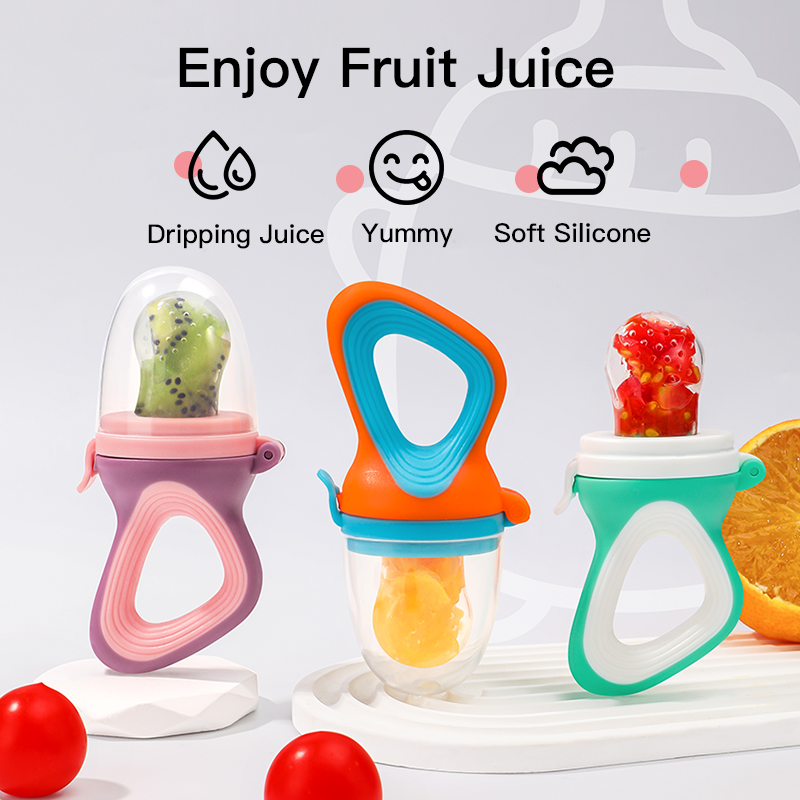
Choosing the primary chewing surface determines the fundamental safety and market positioning of your product. You must weigh the advantages and drawbacks of the two dominant materials.
Silicone reigns supreme in the modern infant feeding market. Liquid Silicone Rubber (LSR) undergoes a platinum curing process, resulting in an exceptionally pure material. It offers phenomenal heat resistance. Parents can safely boil or steam-sterilize these products multiple times daily. Silicone remains completely non-porous. It actively prevents mold and dangerous bacteria from building up on the surface. Furthermore, it feels remarkably soft on sensitive, teething gums.
However, silicone presents some commercial challenges. The raw material costs noticeably more than textiles. It also absorbs pigments easily. Certain foods, like carrots or dark berries, will cause temporary discoloration. Despite these minor drawbacks, we consider silicone the definitive choice for premium positioning and strict hygiene claims.
Textile mesh represents the traditional approach to feeding tools. It offers lower manufacturing costs and requires less expensive tooling. Mesh provides high flexibility. It can comfortably hold various chunky food textures without bursting.
Unfortunately, mesh carries significant safety and hygiene risks. The woven fibers trap microscopic food particles easily. This leads to a high risk of bacterial retention. Parents find mesh exceptionally difficult to clean thoroughly by hand. Over time, aggressive scrubbing causes the nylon to fray. Consequently, consumers perceive mesh products as budget-tier items. We observe mesh declining rapidly in popularity. It remains suitable only for budget-tier markets where sterilization standards face less scrutiny.
The structural components require rigid, impact-resistant plastics. You typically choose between Polypropylene (PP) and Tritan. Manufacturers widely use BPA-free PP because it offers excellent durability at a low cost. It resists shattering when dropped from high chairs. Tritan costs slightly more but provides glass-like clarity and superior scratch resistance. We strongly recommend using BPA-free PP or Tritan to ensure secure locking mechanisms and reliable structural integrity.
Material Properties Comparison
| Component | Material | Sterilizability | Market Perception |
|---|---|---|---|
| Chewing Sac | Platinum-Cured LSR | Excellent (Boil/Steam) | Premium / High Trust |
| Chewing Sac | Nylon Mesh | Poor (Degrades) | Budget / Outdated |
| Handle/Ring | Polypropylene (PP) | Good (Top-rack safe) | Standard / Reliable |
| Cap/Cover | Tritan | Excellent | Premium / Aesthetic |
Navigating global compliance frameworks requires meticulous attention to detail. Regulatory bodies heavily scrutinize infant products. You must secure mandatory certifications depending on your target region. In the United States, you need FDA 21 CFR compliance and CPSC/CPSIA certification. The European market demands LFGB certification and adherence to the EN 14372 standard. LFGB often involves stricter chemical migration testing than FDA guidelines.
Physical hazards pose the most immediate threat to infants. You must strictly enforce your baby fruit feeder specifications during the engineering phase. Consider these three critical physical requirements:
Chemical safety operates on a strict zero-tolerance policy. You must eradicate harmful additives from your supply chain entirely. Your materials cannot contain any traces of Bisphenol A (BPA). They must be completely free of Polyvinyl Chloride (PVC) and dangerous Phthalates. Lead testing remains an absolute necessity for colored plastics and silicone pigments. Any detection of these chemicals will immediately block your shipment at customs and trigger retail bans.
Designing a proprietary product allows you to stand out in a crowded market. However, modifying standard designs drastically impacts your engineering and tooling expenses. You must carefully balance aesthetic ambitions against practical manufacturing constraints.
Design scalability dictates your initial capital expenditure. Modifying handle ergonomics requires completely new injection molds. Intricate handle shapes look appealing but often complicate the mold ejection process. This increases your cycle time and unit cost. Pouch sizes also impact tooling. A successful custom baby fruit feeder strategy often involves age-staged variations. You should offer multiple silicone sac sizes within one package. Provide a Small size for four-month-olds just starting purees. Offer a Medium size for six-month-olds transitioning to soft fruits. Supply a Large size for older infants handling larger food volumes. This multi-size approach adds massive perceived value for the end consumer.
Branding and aesthetic execution require precise communication with your manufacturer. You will likely request specific Pantone color matching for the handles. Silicone takes pigment differently than hard plastics, so exact matching across materials proves challenging. You must also decide between matte and glossy finishes. Matte finishes feel premium and collect less environmental dust. Glossy silicone often feels sticky and attracts lint instantly. If you want custom logo embossing, keep the design shallow. Deeply embossed logos create tiny crevices. These crevices trap food residue and become impossible for parents to sanitize effectively.
Packaging viability represents the final customization hurdle. Your chosen materials must interact safely with your packaging. Blister packs or eco-friendly kraft boxes must not emit Volatile Organic Compounds (VOCs). Cheap packaging adhesives can off-gas and contaminate the sterile silicone before the consumer even opens the box. Ensure your packaging factory uses food-safe inks and adhesives.
Finding a factory is easy. Finding a compliant, trustworthy manufacturing partner requires a rigorous auditing framework. You cannot afford to skip physical and document-based verification steps.
Facility requirements provide the first filter. You must look for factories holding current ISO 9001 certifications. More importantly, observe their production floor. Silicone injection for infant products demands sterile environments. You should mandate an ISO Class 8 (or better) cleanroom environment. Airborne dust instantly bonds to uncured silicone. If they do not operate a certified cleanroom, your products will suffer from embedded particle defects.
Material traceability separates reputable partners from risky vendors. The baby fruit feeder supplier must provide valid, recent testing reports from internationally recognized labs like SGS, Intertek, or TÜV Rheinland. Crucially, they must provide reports specifically for the raw materials they intend to use for your order. Do not accept testing reports based on past finished goods manufactured for other clients. Formulations change frequently, and you need proof of current purity.
Quality Control (QC) protocols need deep investigation. Request their standard operating procedures (SOPs). Ask them how they conduct batch-testing for tear resistance. Inquire about their exact methods for testing latch security on the assembly line. A reliable partner will proudly show you their internal testing rigs and documentation logs.
Once they pass the documentation phase, move to next-step actions. Request physical sample runs or prototypes. Send these prototypes to an independent laboratory for verification testing. If the lab results match the factory's claims, initiate a small pilot order. A pilot order allows you to test their communication, adherence to timelines, and actual mass-production defect rates before committing massive capital.
Transitioning from traditional textile mesh to high-grade liquid silicone is no longer a premium exception. It represents the absolute industry baseline for modern infant care brands. Parents demand impeccable hygiene and safety from feeding tools.
Your long-term commercial success relies entirely on rigorous specification adherence. You cannot cut corners on physical tear testing or chemical purity. Furthermore, you must build a transparent, compliant relationship with a vetted supplier.
Take immediate action on your sourcing journey. Advise your purchasing teams to request raw material certifications upfront. Demand physical prototypes for internal stress testing before you ever initiate custom mold discussions. Protecting the end-user protects your brand equity.
A: Medical-grade or 100% food-grade silicone is the safest material for a solid food introduction baby fruit feeder. It offers exceptional tear resistance against baby teeth. It contains zero toxic chemicals and withstands high-heat boiling, allowing it to be fully sterilized between uses.
A: While technically safe if completely unfrayed, mesh carries a significantly higher risk of mold and bacterial growth. The woven fibers trap microscopic food particles easily. This hygiene risk makes them far less favorable among pediatricians and safety-conscious parents today.
A: The locking ring and handle should feature high-density, BPA-free Polypropylene (PP) or Tritan. These hard plastics withstand repeated dropping from high chairs. They resist aggressive pulling by the infant without snapping or unlatching accidentally during feeding.


