 English


Views: 0 Author: Site Editor Publish Time: 2026-07-30 Origin: Site


Move past surface-level aesthetics. A bottle brush represents a critical tool for infant hygiene and infection prevention. You should never view it as just another kitchen accessory. Poor material selection often leads to severe health consequences. Improper structural designs create micro-scratches inside plastic bottles. These tiny abrasions readily harbor dangerous bacteria. Furthermore, cheap materials cause premature brush degradation. They also encourage rapid mold accumulation deep inside the bristles. Whether you are a parent finalizing your registry or a retailer evaluating options, you need accurate data. This guide breaks down strict, evidence-based specifications. You will learn exactly what is required for safe, long-term use. Protect infant health by mastering these fundamental selection criteria. We focus entirely on performance, hygiene, and durability metrics.
We must frame this cleaning tool correctly. It acts as a primary defense mechanism against milk protein residue. It also prevents dangerous bacterial biofilm formation. Milk contains complex lipids and proteins. Leftover milk residue quickly solidifies inside the container. It creates invisible layers where pathogens thrive. Regular rinsing cannot penetrate these stubborn biofilms. You need mechanical friction to dislodge them completely.
Let us examine the severe micro-scratch risk. Overly stiff bristles create microscopic abrasions inside plastic bottles. These scratches permanently ruin the smooth interior. They create perfect breeding grounds for harmful bacteria. Once scratched, no amount of standard washing removes the embedded pathogens. The structural integrity of the bottle becomes irreversibly compromised. Polypropylene (PP) and Polyphenylsulfone (PPSU) bottles are especially vulnerable to abrasive damage.
To ensure infant safety, an optimal baby bottle cleaning brush must achieve three specific outcomes. Evaluating these success criteria prevents widespread contamination.
Meeting these criteria demands strict adherence to engineering standards. You cannot compromise on these baseline requirements. Daily infant health relies on consistent, hygienic cleaning routines.
Buyers face a critical choice between silicone and traditional hybrids. You must understand how material science impacts daily hygiene. Let us objectively break down these common options. Each material presents distinct operational advantages and inherent flaws. You must weigh them against your daily routine.
Nylon and sponge hybrids remain very popular globally. They offer high friction for stubborn residue removal. They also produce excellent soap foaming. However, you must consider their severe hygiene drawbacks. Their porous nature traps moisture and bacteria easily. They degrade rapidly under continuous use. More importantly, you cannot subject them to high-heat sterilization. Boiling a sponge causes rapid cellular breakdown.
Food-grade silicone offers a distinctly different profile. It is entirely non-porous. It naturally resists microbial growth. You can safely boil or UV sterilize silicone tools up to 400°F (200°C). It also guarantees a zero-scratch cleaning experience. The main downside involves lower lather generation. You will need specific washing techniques to compensate for less foam.
Understanding these material differences directly influences the baby bottle cleaning brush specifications you choose. Durability hinges entirely on the underlying material chemistry. To clarify these differences, review the comprehensive comparison below.
| Material Type | Porosity | Sterilization Capacity | Scratch Risk | Lather Generation |
|---|---|---|---|---|
| Nylon & Sponge Hybrid | Highly Porous | Low (Cannot be boiled safely) | Medium to High | Excellent |
| Food-Grade Silicone | Non-Porous | High (Boiling & UV safe) | Zero | Low to Medium |
Handle ergonomics determine daily usability and safety. We highly recommend non-slip TPR (Thermoplastic Rubber) grips. They provide excellent control when your hands are submerged in soapy water. Core strength matters just as much. You must choose solid-core handles over hollow alternatives. Hollow handles notoriously trap contaminated water. This stagnant water rapidly breeds dangerous mold. Welded seams offer another layer of hygienic protection.
Next, evaluate the head design and overall reach. We strongly prefer 360-degree bristle configurations over flat heads. Flat designs miss crucial curves inside the bottle base. You need flexible tips for reaching the base corners. Wide-neck and angled bottles require highly adaptable brush heads. A rigid head cannot navigate the complex geometry of modern anti-colic bottles.
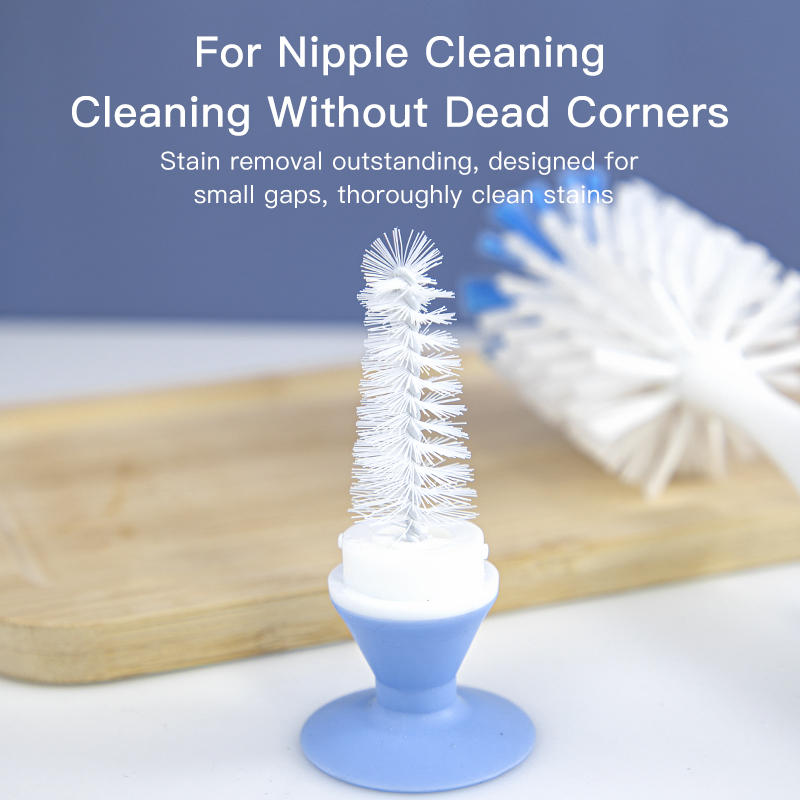
Finally, assess the utility of all-in-one versus modular systems. Hidden or detachable nipple brushes offer immense convenience. They ensure you always have the right tool for small components. You should frame these features as essential feeding accessories baby bottle cleaning brush integrations. They drastically reduce your need for multiple single-use tools. They streamline the entire washing process.
Even the best tools fail if used incorrectly. Mismatched sizing represents a massive operational risk. Never force a wide-neck silicone brush into a narrow-neck glass bottle. Doing so leads to severe bristle shearing. It also guarantees incomplete base cleaning. The bristles cannot expand properly to reach the bottom corners. Sometimes investing in a custom baby bottle cleaning brush helps eliminate sizing mismatches entirely. Custom dimensions ensure precise interior contact.
Sanitization failures occur frequently in busy households. Melting low-grade plastic handles inside steam sterilizers is a common mistake. This happens because users ignore thermal resistance ratings. Always verify heat tolerances before boiling any cleaning tool. A melted handle releases toxic chemical compounds into your sterilization chamber. This cross-contaminates everything inside.
Avoid the "forever brush" fallacy at all costs. Establish transparent timelines for replacement. Many parents assume silicone lasts indefinitely. Emphasize replacing even high-spec silicone tools if physical tearing occurs. Damaged bristles compromise hygiene and cleaning efficacy. Torn silicone creates microscopic crevices where pathogens hide.
Scalability requires strict adherence to industry standards. Retailers, distributors, and brands must prioritize rigorous compliance. You cannot rely on marketing claims alone. Demand concrete proof of material safety. B2B buyers face immense legal liability if they source unsafe infant products. Therefore, you must establish robust procurement protocols.
Compliance and certifications form your procurement baseline. You must demand valid SGS testing reports. Verify FDA compliance, specifically referencing 21 CFR 177.2600 for rubber articles. LFGB certifications for raw materials remain essential for European markets. These documents mathematically prove the absence of harmful chemicals. Never proceed without reviewing these laboratory reports directly.
Consider customization capabilities when developing exclusive product lines. Custom mold tooling allows you to accommodate proprietary bottle shapes. You might need specific pantone matching for brand alignment. Private labeling services streamline your go-to-market strategy. A highly capable partner will guide you through these technical nuances seamlessly.
Vetting a reliable baby bottle cleaning brush supplier requires a detailed checklist. You must audit their manufacturing processes deeply.
Following these standards protects your brand reputation. It simultaneously ensures end-user safety. Proper B2B due diligence eliminates downstream consumer hazards.
The right brush aggressively minimizes contamination risks. It fundamentally protects your investment in high-quality baby bottles. You must apply strict shortlisting logic. First, audit your specific bottle types. Determine if you use glass or plastic. Note whether the necks are narrow or wide. Then, select the most appropriate brush material. Choose silicone for unmatched longevity and superior hygiene. Choose nylon for heavy-duty scrubbing, but commit to strict replacement schedules.
Take immediate action today. Check your current cleaning tools for hidden mold or physical wear. Discard anything showing signs of degradation. For commercial buyers, immediately request updated compliance spec sheets from your manufacturing partners. Proactive hygiene management prevents severe health issues.
A: You should replace sponge or nylon brushes every 3-4 weeks due to bacterial buildup. Silicone brushes last much longer. Replace them every 3-4 months, or immediately upon noticing visible bristle wear or physical tearing.
A: Yes, provided the manufacturer specifications confirm the handle material is rated for high-heat steam. Handles made from PP (Polypropylene) or PPSU safely withstand microwave sterilization temperatures.
A: Yes, but it relies on mechanical friction rather than soap lather. Users often harbor the misconception that less foam equals less clean. Proper scrubbing technique ensures silicone cleans perfectly without scratching.
A: Third-party material safety certifications remain the most critical specification. Require documents proving the materials are BPA, PVC, and Phthalate-free. This ensures strict legal compliance and guarantees end-user safety.


