 English


Views: 0 Author: Site Editor Publish Time: 2026-08-11 Origin: Site


Tiny infants face a unique challenge when their first teeth begin to move below the gums. Between zero and six months, they completely lack the motor skills and jaw control seen in older babies. Their hand-eye coordination remains underdeveloped. Because of this, standard teethers often prove too heavy. They frustrate the infant or create potential safety risks during use.
Choosing the right tiny infants baby teething toy requires careful evaluation. You must balance strict pediatric safety standards with very real ergonomic constraints. Parents also face daily sanitization realities. Toys must withstand aggressive cleaning without degrading.
We must take an evidence-based approach to infant products. You should avoid gimmick designs completely. Instead, focus entirely on verifiable material safety. Prioritize developmental appropriateness and rigorous regulatory compliance. In this guide, you will learn how to evaluate teething products through a medical lens. You will discover exactly which designs support a tiny infant's capabilities while keeping them completely safe.
Evaluating infant products requires a strict medical lens. You must prioritize dental and pediatric safety above visual appeal. Tiny infants explore the world through their mouths. This makes choking hazards a primary concern. Every millimeter of a product matters when dealing with developing airways.
An infant's gag reflex sits much further forward in their mouth compared to an adult. This natural defense mechanism prevents them from swallowing large objects. However, a poorly designed baby teething toy can trigger this reflex constantly. This causes discomfort and vomiting. Safe designs incorporate built-in safety shields. They use specific length restrictions to prevent any part of the toy from reaching the back of the throat. Pediatric guidelines suggest teething surfaces should not extend far enough to bypass the gums. Broad bases or cross-bar designs physically block the product from going too deep.
Material safety goes beyond simple marketing claims. You must rigorously verify "BPA-free" and "phthalate-free" labels. Phthalates soften plastics but carry well-documented health risks. Polyvinyl chloride (PVC) often contains these harmful softeners. You should avoid PVC entirely. Medical-grade or food-grade silicone offers vastly superior safety. Silicone acts as an inert material. It does not leach chemicals when exposed to saliva or heat. It provides a hypoallergenic surface that parents can trust.
As primary teeth emerge, they act like tiny, sharp knives. Teethers must withstand significant mechanical stress. You must assess the tensile strength of the material.
Here are three critical steps laboratories use to test bite resistance:
If a product fails these tests, a piece could break off. This creates an immediate, life-threatening choking hazard. Always look for mechanical safety certifications before handing a product to a child.
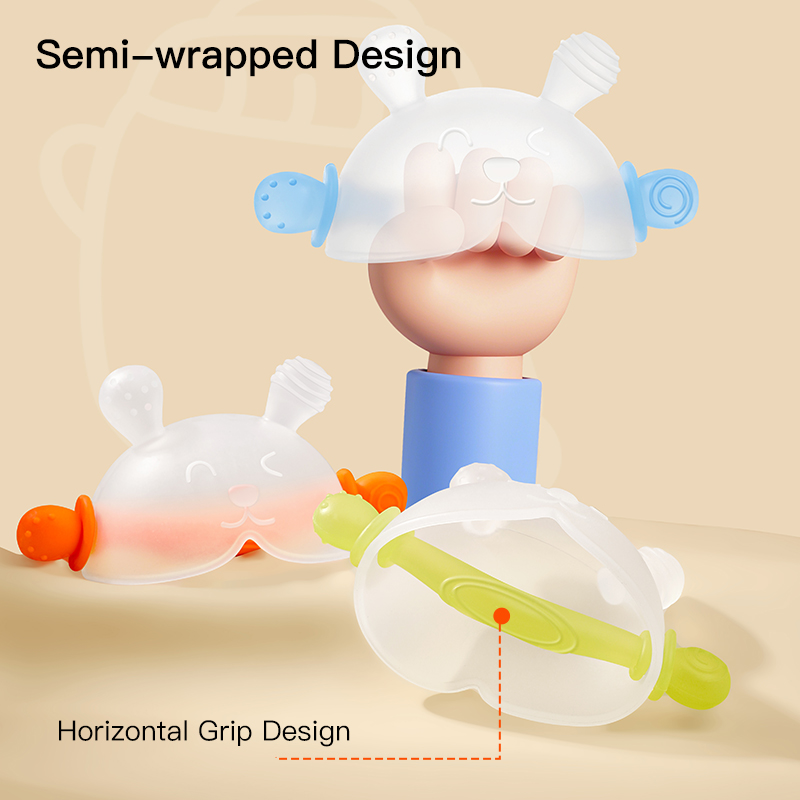
You must translate an infant's developmental constraints into strict technical product requirements. A three-month-old cannot physically manage the same toys as a toddler. Their physical limitations dictate what shapes and textures will actually soothe their gums.
Tiny infants possess a palmar grasp reflex. They clutch objects instinctively but lack the coordination to adjust their grip. Target weights remain critical here. If a toy exceeds 2 ounces, infants will drop it repeatedly. Heavy toys cause massive frustration for both baby and parent. We recommend ultra-thin, loop-like structures. Wearable designs, such as wristband teethers, work exceptionally well. They secure directly to the baby's hand. This prevents drops and allows the infant to bring the soothing surface to their mouth independently.
Specific baby teething toy specifications dramatically impact soothing efficacy. Textures stimulate the gums and increase blood flow, which relieves pressure. However, aggressive textures can cause harm.
Textures must remain shallow. Deep crevices trap bacteria and become impossible to clean properly.
Cool temperatures numb sore gums effectively. Evaluate how long different materials hold a chill. Silicone retains cold well but warms up safely against the baby's skin. We strongly recommend refrigerator cooling over freezer cooling. Freezing solid objects makes them too hard. This extreme hardness can bruise the gums. Furthermore, frozen surfaces can stick to delicate oral tissue. This causes painful ice burns on sensitive infant gums. A few minutes in the refrigerator provides the perfect, safe temperature drop.
Buyers need an objective, balanced evaluation of popular market options. Shortlisting the right product becomes easier when you understand the inherent strengths and weaknesses of each material category.
Material Comparison Matrix
| Material Type | Primary Advantages | Notable Drawbacks |
|---|---|---|
| Solid Silicone | Highly durable, easily sterilized, hypoallergenic. | Can attract pet hair and dust due to static. |
| Natural Rubber | Eco-friendly, soft tactile feel, flexible. | Degrades under high heat; potential latex allergies. |
| Wooden (Untreated) | Great sensory feedback, naturally antibacterial. | Cannot be boiled; requires special care. |
| Gel-Filled Plastics | Retains cold temperatures longer. | High puncture risk; cannot be heat sterilized. |
These two materials dominate the premium market. Solid silicone proves highly durable. You can toss it in the dishwasher safely. It remains naturally mold-resistant. Natural rubber offers similar benefits but with a softer, more organic feel. However, natural rubber requires careful handling. It can degrade quickly if exposed to high heat or direct sunlight over long periods.
Wooden teethers appeal heavily to eco-conscious buyers. They provide excellent tactile development. The hard surface offers intense counter-pressure for stubborn teeth. Unfortunately, wood demands specialized cleaning routines. You cannot boil wooden toys. If you soak them, the wood swells and cracks. Furthermore, poorly manufactured wooden items carry a severe risk of splintering. Always check for proper sealing with food-grade oils.
These classic designs provide extended cooling relief. That remains their only real advantage. We advise strict skepticism here. They carry a high puncture risk. An infant with a sharp new tooth can easily pierce the outer plastic. You cannot steam-sterilize these products, making hygiene a nightmare. Worst of all, potential toxicity risks emerge if the internal liquid leaks into the baby's mouth. Most pediatric experts now recommend steering clear of liquid-filled options entirely.
Parenting forums frequently light up with horror stories about moldy baby toys. You must address these real-world parental pain points before making a purchase. Maintenance traps ruin perfectly good products and endanger infant health.
Seamless designs stand strictly superior to assembled toys. You should apply the "One-Piece Rule" to every teething product you evaluate. Toys built from multiple fused parts contain tiny joints and seams. Toys that make noise often feature small squeaker holes. These microscopic gaps trap drool, milk, and food particles. Dark, moist environments create perfect breeding grounds for black mold and harmful bacteria. A one-piece design eliminates these crevices entirely. If a toy has a seam, you should assume bacteria will eventually grow inside it.
Tiny infants have immature immune systems. Daily sterilization is not just preferred; it is mandatory. You must evaluate materials based on their ability to survive aggressive cleaning. Can the product withstand rolling boiling water for five minutes? Will it survive standard UV sterilization cycles without becoming brittle? Can it sit on the top rack of a dishwasher daily without degrading? Food-grade silicone passes all these tests effortlessly. Other materials, like plastics or wood, fail under extreme temperatures. If a teething toy requires delicate hand-washing, exhausted parents will likely skip cleaning it properly.
Retailers, brand owners, and highly vigilant buyers must apply strict B2B decision criteria. Sourcing the right product requires looking beyond surface aesthetics. You must interrogate the supply chain.
A reputable baby teething toy supplier operates with complete transparency. They must provide exact laboratory testing reports upon request. You should demand FDA material compliance documents to verify the silicone grade. You must request CPSC mechanical testing reports to confirm bite resistance and choke-hazard compliance. In Europe, the EN71 certification stands as the gold standard. Do not accept simple verbal assurances. Ask for recent, third-party lab results tied to specific product batches.
Developing a custom baby teething toy requires careful planning. First, you must account for upfront mold costs. Precision steel molds for high-grade silicone require significant investment. Second, you must prototype for ergonomic grip. Testing a 3D-printed model ensures the loops fit tiny hands perfectly. Finally, you can integrate brand-specific sensory textures. You might add signature ridges or raised logos. However, these custom textures must never compromise the one-piece safety rule or create cleaning blind spots.
Watch out for alarming signals during the sourcing process. Warn your procurement team against suppliers with vague material origins. If they cannot name their silicone raw material provider, walk away. A lack of batch-tracking capabilities indicates poor quality control. Finally, beware of generic "CE" marks stamped on packaging without accompanying technical documentation. Scammers frequently print fake compliance logos. Vigilance remains your best defense against dangerous counterfeit goods.
Choosing a teething toy for a tiny infant demands a strict, uncompromising framework. You must prioritize lightweight ergonomics. Babies under six months simply cannot manage heavy, bulky items. You should insist on one-piece silicone or natural rubber construction. Seamless designs eliminate mold risks entirely. Furthermore, you must verify strict safety compliance through independent laboratory testing.
Our final recommendation logic is straightforward. Advise parents to discard any teether that cannot survive boiling water or a dishwasher cycle. If a toy is too heavy for a three-month-old to bring to their mouth independently, it fails the basic usability test. Functionality and safety must overlap perfectly.
Before making your next purchase, take immediate action. Verify the certifications of the product. If you plan to partner with a manufacturer, request their latest CPSC or FDA compliance reports today. Protect your infants by trusting data over marketing.
A: You should introduce a teether when early signs emerge, typically around 3 to 4 months of age. Look for excessive drooling, fussiness, and constant hand-chewing. Tiny infants explore with their mouths early on. Providing a lightweight, safe toy redirects them from chewing their fingers and prepares their gums for incoming teeth.
A: No. Medical consensus advises against freezing teething toys. Frozen solid items become too hard and can bruise delicate gums. Furthermore, extreme cold can cause cellular damage or ice burns. You should always use the refrigerator instead. A chilled teether provides safe, effective numbing relief without risking tissue damage.
A: You should inspect teethers daily and replace them immediately if you spot signs of damage. Look for tiny tears, bite marks, or surface stickiness. Natural rubber breaks down faster and may become tacky after a few months. Silicone lasts longer, but any structural weakness means the toy is now a choking hazard.


