 English


Views: 0 Author: Site Editor Publish Time: 2026-07-19 Origin: Site


In the highly regulated infant care market, selecting a supplier is not just a basic margin calculation. It is a critical brand protection decision. A substandard container risks formula contamination, product recalls, and irreparable damage to retailer trust. Retailers face a saturated market of manufacturers making broad claims. Bridging the gap between stringent consumer demands and B2B realities requires a rigorous evaluation framework. Medical-grade safety and on-the-go convenience matter heavily to modern parents. At the same time, scalability and consistent quality control drive your internal retail operations. To build a profitable and compliant infant feeding category, you must carefully evaluate potential suppliers. We will break down exactly how to verify material certifications, OEM flexibility, airtight engineering, and supply chain transparency. You will learn the best practices for assessing factory protocols. You will also discover actionable steps to shortlist and test reliable partners before placing any large commitments.
Safety is Non-Negotiable: Strict adherence to FDA, LFGB, and BPA-free standards is the baseline for any viable supplier.
Engineering Matters: An effective airtight formula container prevents moisture and bacterial ingress, directly impacting product viability and consumer reviews.
Assess OEM Agility: A reliable milk powder container manufacturer must demonstrate in-house tooling, scalable production, and strict batch-testing protocols.
Mitigate Supply Chain Risk: Prioritize suppliers offering transparent third-party audits (ISO, BSCI), realistic MOQs, and clear defect-resolution terms for wholesale orders.
The cost of manufacturing non-compliance can destroy a brand overnight. You must frame the business risks associated with poor manufacturing accurately. Failed safety audits lead to immediate regulatory action. Furthermore, spoiled formula due to moisture ingress generates fierce consumer backlash. Parents share negative reviews quickly online. This backlash damages your overall retail reputation. Securing a premium baby milk powder container prevents these expensive disasters.
You must define what a successful supplier partnership actually looks like. Success criteria for retailers include consistent unit economics. They also demand zero compliance breaches. You rely heavily on reliable lead times during peak promotional seasons. A good partner understands these retail demands perfectly. They align their production schedules to match your inventory turnover needs.
Parent demands dictate the exact products you must stock. Pediatric guidelines strongly warn against using moisture-exposed formula powder. Consumer advocacy groups consistently push for non-toxic, sustainable plastics. These consumer-driven B2B decisions force buyers to scrutinize supplier capabilities deeply. You cannot afford shortcuts in this category. Your ultimate choice impacts infant health directly. Therefore, rigorous vetting remains your most powerful risk management tool.
You must demand verified, unexpired documentation from every potential partner. FDA compliance applies strictly to the US market. LFGB compliance is necessary for selling within Europe. RoHS compliance ensures no hazardous materials exist inside electronic dispenser variants. Always require independent, third-party lab testing. These tests must definitively prove products are entirely free of BPA. They must also lack Phthalates and PVC.
Best Practice: Never accept factory-issued certificates at face value. Always cross-reference the certificate number directly through the issuing laboratory's public database. Reputable labs like SGS or TUV maintain searchable online registries for this exact purpose.
Evaluating an airtight formula container requires deep attention to physical engineering. Look for high-density, food-grade silicone sealing rings. Double-snap closures provide crucial extra security. UV-blocking opaque materials protect sensitive nutrients from rapid light degradation. These features ensure long-term product viability.
The science of moisture prevention dictates product longevity. Formula powder is highly hygroscopic. It absorbs ambient humidity aggressively. When moisture enters, clumping occurs immediately. This clumping alters the critical water-to-powder mixing ratio. Incorrect ratios can cause infant malnutrition. Furthermore, trapped moisture breeds dangerous bacteria like Cronobacter. Therefore, precision engineering in closures is a life-saving feature. Supplier engineering tolerances matter immensely here.
Certification | Region / Scope | Key Focus |
|---|---|---|
FDA | United States | Food-contact safety and non-toxicity |
LFGB | Europe | Strict chemical migration limits |
BPA-Free | Global Requirement | Elimination of Bisphenol-A plastics |
RoHS | Global (Electronics) | Restriction of hazardous substances |
Assessing an OEM milk powder container provider involves examining their physical infrastructure carefully. Do they rely on third-party molds? Do they have robust in-house tooling capabilities? In-house tooling ensures tighter intellectual property protection. It also allows for much faster design iteration. You bypass the delays caused by external machine shops.
Evaluate their broader customization scope. Can they handle precise Pantone color-matching? Do they offer crisp logo embossing? Custom capacity measurements serve as a major selling point. Retailers often need specialized scoop sizes for different geographic markets. A strong manufacturing partner accommodates these nuanced adjustments effortlessly.
Look for active ISO 9001 certification. Ask specific questions about their standard Defect Rate. Define acceptable AQL (Acceptable Quality Limit) standards before signing anything. Request a detailed breakdown of their stress-testing procedures. High-quality factories perform routine drop tests. They evaluate silicone seal degradation over extended periods.
Common Mistake: Failing to test for dishwasher safety. Modern parents demand easy cleaning. Dishwasher-safe temperature testing is completely non-negotiable today. Plastics warping under high heat will destroy the airtight seal instantly. Ensure your supplier runs prolonged thermal cycling tests.
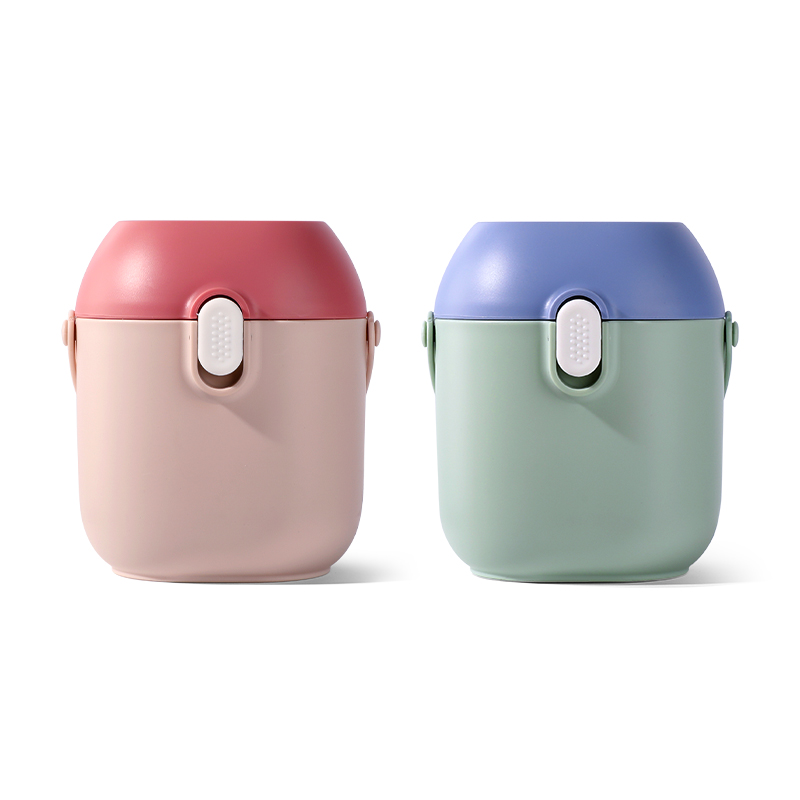
Modern parents travel constantly. This mobility drives massive growth for the portable formula dispenser. Retailers need suppliers offering highly functional, multi-compartment designs. Stackable and travel-friendly options sell out quickly. You must stock products fitting easily into compact diaper bags.
Consumers expect specific, high-end features. They look for built-in exact leveling scrapers. They demand dedicated scoop storage. Dedicated storage separates dirty hands from the clean powder. Easy one-handed operation wins excellent online reviews. Parents often hold a hungry infant in one arm. Consequently, a dispenser requiring two hands frustrates them deeply. Your selected product must solve this exact pain point.
Can the milk powder container manufacturer produce a cohesive, unified product line? Evaluate their overall scalability across various SKUs. They should scale seamlessly from small travel dispensers to high-capacity countertop storage units. Cohesive lines build stronger brand loyalty. A parent buying a travel dispenser will likely purchase the matching countertop version later. Your supplier must support this upselling strategy through consistent design language.
Procuring baby milk powder container wholesale orders requires strategic financial planning. Structure your commercial agreements carefully. Evaluate Minimum Order Quantities (MOQs) thoroughly. Compare these MOQ numbers against your expected inventory turnover rate. Excessively high MOQs can tie up crucial operating capital. Negotiate tiered pricing structures to protect your early launch phases.
Raw material sourcing visibility remains paramount. Does your supplier have localized supply chain vulnerabilities? Reliable manufacturers disclose their sourcing networks readily. They must show exactly where they procure raw plastics and food-grade silicones. If their silicone provider faces delays, your entire production halts. Transparency prevents these unexpected shortages.
Audits and accountability protect your financial investment. Conduct independent factory audits regularly. Utilize established frameworks like BSCI or Sedex. These frameworks ensure ethical manufacturing practices. Establish clear Service Level Agreements (SLAs). Define exactly how you will handle defective batches. If a batch fails the AQL inspection, the factory must cover replacement costs. We strongly recommend writing these exact terms into your master agreement.
Step 1: The RFI (Request for Information): Start your search by issuing a formal RFI. This document filters out brokers from actual manufacturers. You must demand factory-direct compliance certificates immediately. Request live video tours of their production floor. A legitimate factory welcomes these requests. Brokers often stall or refuse video inspections completely.
Step 2: Sample Stress Testing: Never skip physical evaluation. Order multiple product samples immediately. You must test the airtight seal under varied conditions. Submerge the sealed container in water. Check for any escaping air bubbles. Perform multiple drop tests from typical kitchen counter heights. The plastic must not shatter. Assess odor retention by storing strong-smelling foods temporarily. High-quality materials resist absorbing smells permanently.
Step 3: The Pilot Order: Start your relationship with a lower-volume trial run. This pilot order evaluates essential operational metrics safely. Monitor their lead time accuracy closely. Check the packaging integrity upon arrival. Evaluate their communication responsiveness during the shipping process. Do not commit to a long-term contract yet. Treat this phase as an extended operational interview.
Selecting a supplier for infant feeding accessories requires a skeptical, evidence-based approach. You must prioritize material safety, structural engineering, and manufacturing transparency above basic pricing models. A rigorous vetting process eliminates unreliable partners early. It ensures you only work with factories capable of scaling alongside your retail growth.
The right partner protects your brand from severe liability. They deliver products solving genuine parent pain points effectively. Airtight engineering and travel-friendly designs drive your sales momentum. By insisting on strict audits and comprehensive sample testing, you secure a highly profitable category.
We recommend buyers begin their search immediately. Request a compliance-verified catalog from your shortlisted candidates. Order a sample pack from these manufacturers. Begin your physical stress testing protocols today. Taking these deliberate actions guarantees a successful, compliant product launch.
A: Minimum Order Quantities vary significantly across manufacturers. They typically range from 1,000 to 5,000 units. Off-the-shelf white-label products usually require lower minimums. Fully custom OEM designs demand higher initial commitments to cover dedicated mold setups and specialized tooling.
A: You must request the actual laboratory test reports directly. Check the date of issuance carefully to ensure validity. Verify the testing laboratory's credentials. We recommend cross-referencing certificate numbers with reputable international labs like SGS, TUV, or Intertek.
A: Direct manufacturers offer better pricing structures. They provide direct control over the entire OEM process. They also offer clearer accountability for quality control. Trading companies might offer broader product assortments. However, they often obscure the original supply chain origin, increasing compliance risks.
A: Baby formula is highly hygroscopic. It absorbs ambient moisture aggressively. Unwanted moisture causes severe clumping. It leads to rapid nutrient degradation. Furthermore, damp powder encourages dangerous bacterial growth. Container sealing technology remains the primary driver of overall product viability.


