 English


Views: 0 Author: Site Editor Publish Time: 2026-08-09 Origin: Site


Sourcing infant care products requires balancing retail margins against zero-tolerance safety standards. A single non-compliant batch can easily lead to costly product recalls and severe legal penalties. Such events often cause permanent brand damage in a highly sensitive consumer market. Parents trust retailers to act as the ultimate gatekeepers for their children's safety.
Retailers, pharmacies, and institutional buyers face immense pressure to select flawless inventory. You must evaluate these items far beyond their simple unit cost. Material science, regulatory compliance, and supply chain reliability demand your absolute attention. Identifying a dependable manufacturer separates successful brands from those facing constant operational hurdles.
This comprehensive guide provides a strategic decision framework for vetting potential manufacturing partners. We explore how to structure a low-risk, high-yield bulk order effectively. You will learn actionable steps to secure compliant, market-ready inventory. Following this framework protects both your bottom line and your long-term brand integrity.
Compliance is the baseline: Viable products must possess verifiable documentation for regional standards (e.g., CPSC, EN 1400).
Material dictates marketability: 100% medical-grade silicone and one-piece constructions currently dominate consumer preference and safety ratings.
Supplier vetting requires operational scrutiny: A reliable partner offers transparent QA/QC processes, batch traceability, and clear defect resolution policies.
Assortment strategy reduces dead stock: Bulk orders must account for age-staged sizing (0-6m, 6-18m) and multi-pack retail habits.
Selling a wholesale baby soother involves navigating one of the highest-liability categories in global retail. Infant products carry immense inherent risks due to the vulnerable nature of the end-user. Sub-standard goods trigger severe financial penalties and devastating reverse-logistics costs. Customs agencies frequently seize non-compliant shipments at the border, leaving your shelves completely empty. Furthermore, product liability lawsuits can bankrupt unprepared retailers overnight. Consumer backlash spreads rapidly across social media platforms whenever safety issues emerge. Such negative exposure destroys consumer trust permanently, making recovery almost impossible.
Modern parents rely heavily on established medical guidance rather than flashy marketing claims. Organizations like the Mayo Clinic and the American Academy of Pediatrics directly shape parental purchasing choices. Shoppers meticulously read rigorous consumer reports before making any retail decisions. Your retail inventory must align perfectly with these evidence-based expectations to remain competitive. Shoppers refuse to compromise on child safety under any circumstances.
Therefore, your entire evaluation mandate must evolve immediately. Sourcing inventory requires shifting focus away from the lowest cost per unit. Instead, buyers must prioritize the lowest risk per unit during vendor negotiations. A safe product ultimately protects both the infant and the business entity. Retailers who embrace this risk-mitigation mindset secure long-term customer loyalty and stable profit margins.
Evaluating a commercial-grade baby soother requires strict dimensional analysis. Material composition and structural design dictate overall safety and market viability.
Parents demand absolute chemical transparency from modern infant brands. You must source a certified BPA-free baby soother to pass basic market entry requirements. Products must remain explicitly free from harmful phthalates and PVC plastics. Latex components often introduce severe allergen risks and degrade quickly under sunlight. Manufacturers phasing out latex see much higher acceptance rates in premium retail channels.
Medical-grade silicone serves as the absolute industry standard for modern pacifiers. Food-grade silicone also provides excellent durability for budget-conscious product lines. These premium materials tolerate high-heat sterilization effortlessly without breaking down. They resist degradation during daily boiling or steam cleaning routines. Furthermore, medical-grade variants lack porous surfaces, which effectively prevents dangerous bacterial buildup over time.
Physical design plays a critical role in defect reduction and pediatric safety.
One-piece vs. Multi-part: Single-mold silicone designs eliminate dangerous choking hazards completely. Detachable shields and handles can easily break apart under biting pressure. Seamless construction prevents these mechanical failures from occurring. Hospitals globally recommend one-piece designs specifically for this undeniable safety advantage.
Orthodontic Features: Nipple shape directly impacts long-term pediatric dental development. Products should feature symmetrical or orthodontic nipples to accommodate growing gums. These specialized designs support natural palate formation and prevent future dental misalignment. Parents actively search for these orthodontic claims on retail packaging.
Ventilation: Air circulation prevents painful perioral dermatitis around the infant's mouth. Saliva rash remains a major complaint in parental product reviews online. Shields must include adequate air holes strategically placed near the cheeks. Proper ventilation keeps the surrounding skin dry, comfortable, and free from irritation.
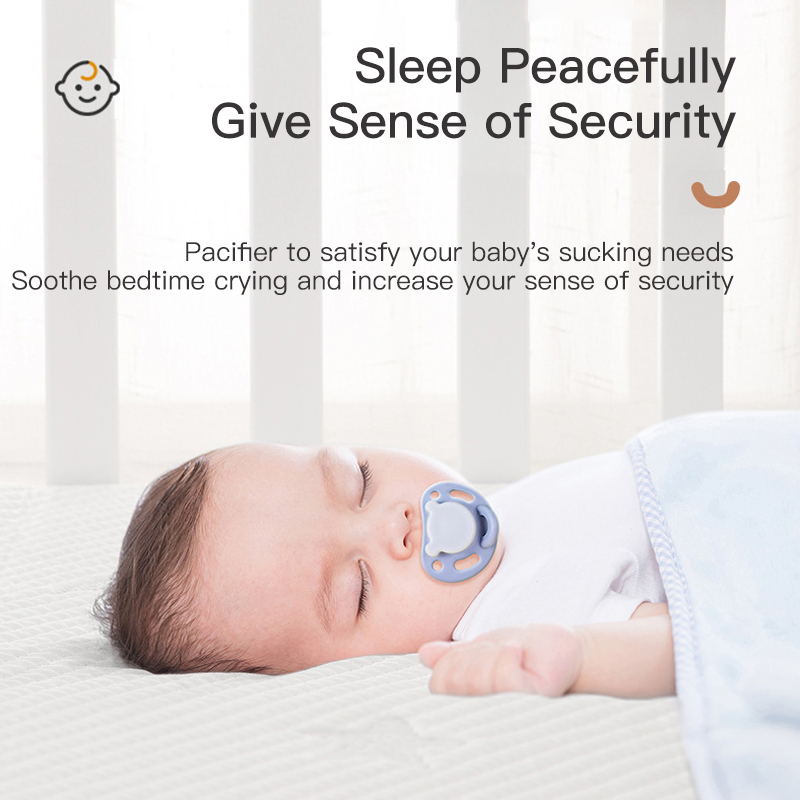
Securing reliable inventory means rigorously vetting your silicone soother supplier. Comprehensive paperwork proves actual compliance and protects your business from legal liabilities.
Importation requires non-negotiable certifications to clear customs smoothly. In the United States, items must pass strict ASTM F963 testing standards. They must also meet comprehensive 16 CFR Part 1511 federal regulations. European markets strictly enforce EN 1400 compliance for all infant pacifiers. Retailers simply cannot bypass these mandated regional safety requirements.
Global Regulatory Standards Overview
Target Region | Governing Standard | Primary Testing Focus Areas |
|---|---|---|
United States | ASTM F963 / 16 CFR 1511 | Mechanical strength, shield size, chemical limits, lead content. |
European Union | EN 1400 | Bite resistance, packaging warnings, material purity, ventilation. |
Canada | CCPSA | Toxicity levels, physical hazard prevention, flammability limits. |
A legitimate manufacturing partner readily provides recent lab test reports. Third-party laboratories like SGS or Intertek should conduct these unbiased evaluations. Reports must cover physical and mechanical hazards comprehensively to ensure durability. Heavy-duty pull tests verify physical strength under extreme tension from teething infants. Chemical composition analysis ensures material purity across every single production batch.
Traceability protects your retail brand during unforeseen safety events or widespread recalls. Ensure the manufacturer molds distinct date codes directly into the silicone product. Batch numbers can also appear clearly on the primary blister packaging. This practice guarantees immediate recall readiness if an issue arises post-purchase. Without batch traceability, you might have to recall your entire inventory simultaneously.
Scaling a retail brand often requires heavily customized product lines. Partnering with a capable factory ensures your supply chain can handle rapid growth.
Evaluating the viability of an OEM baby pacifier involves strategic business trade-offs. Customization allows for precise Pantone color matching to fit your specific brand identity. You can develop proprietary shield shapes to stand out on crowded retail shelves. Engraved branding elevates your perceived market value significantly among premium shoppers. Modern parents highly favor muted, aesthetically pleasing tones over loud primary colors.
However, you must carefully assess the underlying financial trade-offs. Custom molds require significantly higher upfront tooling costs to engineer. They also demand longer lead times, often adding 30 to 45 days for initial production. Conversely, buying off-the-shelf white-label designs allows much faster market entry. White labeling drastically reduces your initial capital expenditure while testing new markets.
Supplier consistency dictates your long-term commercial success in the infant category. Determine the factory’s Defect Rate Acceptable Quality Limit (AQL) before signing contracts. A strict AQL prevents unsellable goods from reaching your distribution warehouse. Facilities maintaining an AQL of 1.5 or lower demonstrate superior manufacturing control.
Verify their internal factory audit status independently through official documentation. Certifications like ISO 9001 demonstrate robust internal management and operational systems. BSCI compliance ensures ethical, safe, and consistent manufacturing practices globally. These strict protocols protect your overarching brand reputation from disastrous supply chain scandals.
Placing an infant pacifier bulk order requires precise demographic planning. Proper assortment management prevents stranded capital and maximizes inventory turnover rates.
Distribute the order volume accurately across various infant developmental stages. Typical sizing includes 0-6 months, 6-18 months, and 18+ months. Base these purchasing ratios on your local market demographic data. The 6-18 month category usually experiences the highest replacement volume due to teething. Stocking too many newborn sizes often results in slow-moving, stranded inventory.
Packaging format heavily influences operational efficiency and ultimate profit margins.
Brick-and-Mortar: Physical retail demands high visual shelf appeal. Blister packs and peg-ready boxes work best for standard store displays. They provide secure hygiene sealing to prevent tampering in busy retail environments. Clear packaging allows parents to inspect the nipple shape before purchasing.
E-commerce: Online sales require smart, frustration-free packaging formats. Flat-pack optimized designs reduce dimensional shipping weight significantly for couriers. This logistical approach lowers fulfillment costs across massive online order volumes. It also prevents polybag crushing during transit to the consumer's home.
Retailers must factor in the extremely high daily "loss rate" of pacifiers. Parents constantly lose these small items in cars, strollers, or daycares. Structure your inventory heavily around 2-packs or 3-packs to meet this reality. Multi-packs naturally drive a higher average order value (AOV) per customer transaction. They perfectly meet the ongoing parental demand for immediate, stress-free backups.
Common operational hurdles can disrupt your supply chain unexpectedly. Anticipating these roadblocks ensures a smooth product launch and consistent retail availability.
Improper warehouse storage presents a silent but severe threat to product quality. High ambient heat degrades silicone components rapidly over several months. Direct UV exposure breaks down material integrity and causes unsightly yellow discoloration. This deterioration can occur long before the product ever hits your store shelves. Ensure your third-party logistics provider utilizes modern, climate-controlled storage facilities.
Polybags require very specific legal text to meet national safety laws. Missing warning labels cause immediate shipment rejection at major fulfillment centers. Omitted suffocation hazard text violates fundamental safety protocols universally. Platforms like Amazon FBA strictly enforce these precise rules during inbound receiving. Retail compliance teams will refuse non-compliant inventory instantly, causing severe stockouts and lost revenue.
Follow these critical steps when finalizing your vendor selection process:
Request physical samples for internal pull-testing and thorough visual inspection.
Demand complete compliance dossiers before discussing Minimum Order Quantities (MOQs).
Negotiate a limited trial run using standard terms before committing to custom OEM tooling.
Verify third-party lab certificates directly with the issuing testing agency to prevent fraud.
Successful bulk sourcing merges strict pediatric safety criteria with comprehensive supply chain due diligence. Buyers cannot afford to overlook regulatory documentation in this high-risk product category. Evaluating factory audit reports reduces operational risks and protects your capital investments significantly. Your purchasing strategy must prioritize transparent, highly reliable manufacturing partnerships above all else.
We strongly recommend prioritizing one-piece, medical-grade silicone designs for bulk retail orders. These specific models consistently out-perform multi-part alternatives in rigorous laboratory durability tests. They also eliminate dangerous choking hazards entirely, offering parents complete peace of mind. Secure airtight third-party testing certifications before finalizing any manufacturing contract. Taking these deliberate steps protects vulnerable infants while shielding your business from liability.
A: Minimum Order Quantities (MOQs) vary based on the manufacturing approach. Stock white-label models generally require lower commitments, often ranging from 500 to 1,000 units. Custom OEM molds demand higher volumes to justify tooling costs, typically starting at 3,000 to 5,000 units per design.
A: Yes, silicone products possess a finite shelf life. High-quality silicone pacifiers typically last three to five years in storage. However, warehouses must keep the inventory away from direct sunlight, extreme heat, and harsh UV exposure to prevent premature material degradation.
A: No, you should never blindly accept provided documents. Buyers must verify certificates directly with the issuing third-party laboratory, such as SGS or Intertek. Direct verification prevents document fraud and ensures the testing reports match the specific product batch you intend to order.
A: One-piece pacifiers feature a significantly lower defect rate because they lack mechanical joints. This seamless design eliminates assembly errors and completely removes the risk of detachable parts causing choking hazards. Modern hospital guidelines strongly advocate for these single-mold designs.


