 English


Views: 0 Author: Site Editor Publish Time: 2026-08-04 Origin: Site


Procuring age-segmented pacifiers goes far beyond tracking simple consumer preference. For modern distributors, it serves as a critical inventory compliance strategy and essential risk-management protocol. You face severe challenges if you stock a universal, one-size-fits-all pacifier line. Such an approach dramatically increases choking hazard risks for growing infants. It also amplifies your product liability and drives up retail return rates across your distribution network. Retailers now demand precise product safety alignments. They require clear developmental categories protecting babies and reassuring parents. This article provides an evidence-based framework for wholesale buyers. We will evaluate how to select and properly source age-appropriate pacifiers. You will learn how to align product specifications matching strict clinical recommendations. We also explore meeting non-negotiable international safety standards. By mastering these procurement fundamentals, you build a safer, more profitable product portfolio.
Age-Tiered Sizing is a Safety Mandate: Structuring inventory around the standard 0-6m, 6-18m, and 18m+ ranges mitigates choking risks and supports natural oral development.
Material Predicts Longevity: Medical-grade silicone outpaces natural latex in durability, allergen avoidance, and B2B shelf-life.
Compliance is Non-Negotiable: Viable suppliers must provide documentation for tensile strength and shield ventilation standards (e.g., CPSC, EN 1400).
Orthodontic Designs Drive Demand: Retailers increasingly prioritize pacifiers designed to minimize dental misalignment, making orthodontic options a required wholesale category.
Modern retail partners demand precisely segmented inventories. Clear categorization improves shelf organization. It also significantly boosts parent conversion rates. Shoppers feel overwhelmed navigating unorganized infant care aisles. Presenting clearly marked age tiers removes purchase friction entirely. Parents buy confidently when they see distinct developmental stages printed clearly on the packaging. Your retail partners rely on you providing this clarity during the procurement phase.
Ignoring age guidelines introduces severe liability and safety risks. An undersized shield poses a catastrophic choking hazard for older infants. A fourteen-month-old possesses a larger oral cavity and much stronger jaw muscles. If you supply a newborn-sized shield to this demographic, the entire unit can easily lodge inside the airway. Ambiguous age guidelines shift legal liability directly onto the distributor. You must mandate strict segmentation protecting both the end-user and your business operations.
Infants experience rapid physiological changes during their first two years. These developmental milestones dictate entirely different structural requirements. The baby's oral cavity expands. Their sucking mechanics mature rapidly. Teething introduces entirely new bite forces. You cannot solve these varying needs using one universal shape. Different bulb structures and shield curvatures become necessary as babies grow. Stocking a dedicated baby soother line tailored specifically for each stage ensures proper physiological support and market compliance.
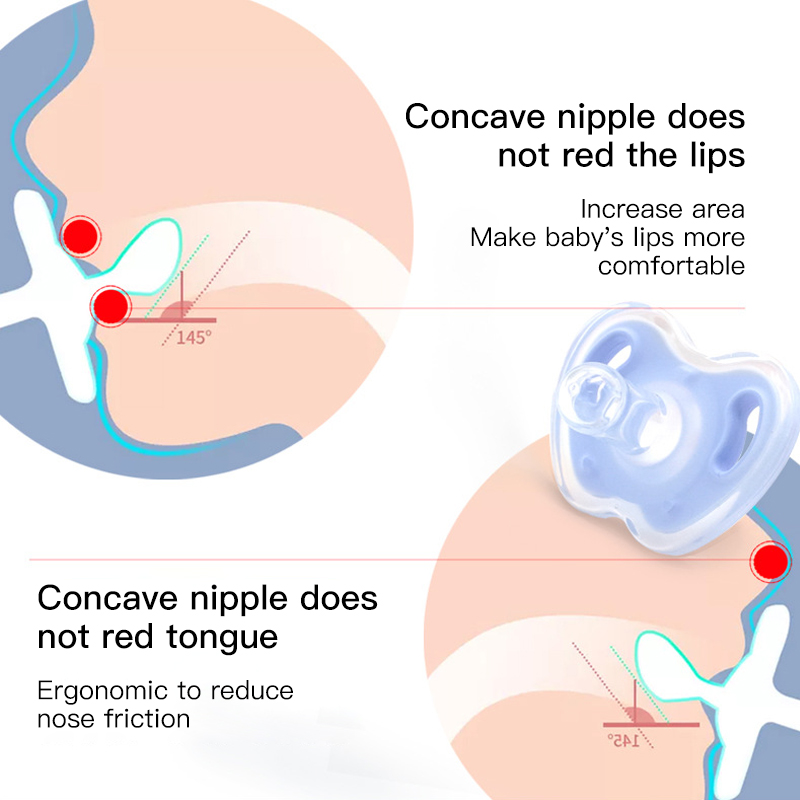
Understanding a precise infant pacifier age guide streamlines your inventory planning. You must align your procurement strategy matching these distinct life stages perfectly.
Evaluating newborn pacifier sizes requires strict attention to weight and softness. Newborns lack robust facial muscle tone. You must select ultra-lightweight shields preventing premature facial fatigue. The bulb itself must remain short and extra soft. This specific geometry avoids triggering hyperactive gag reflexes. It also minimizes nipple confusion during early breastfeeding stages.
Implementation reality dictates this remains a high-turnover category. Distributors must prioritize single-piece construction minimizing bacterial accumulation. Parents sterilize newborn items constantly using boiling water or UV machines. Single-piece designs endure frequent sterilization much better than complex assemblies.
Infants entering the six-to-eighteen-month window develop entirely new habits. Teething begins, demanding increased bite resistance. Evaluation criteria must shift toward structural durability. You must source products featuring slightly larger shields. This expansion prevents the older baby from pulling the entire unit inside their mouth.
Your implementation reality here involves balancing competing features. The material must remain soft enough ensuring comfort. Simultaneously, it requires enough structural integrity resisting newly erupted teeth. Suppliers must utilize thicker materials near the base of the bulb preventing punctures.
Toddlers generate immense jaw pressure. Your evaluation criteria must prioritize maximum tensile strength. Highly durable materials become mandatory. You should also look for pronounced orthodontic bulb designs supporting mature palates.
While this stage represents a lower sales volume, it requires higher regulatory scrutiny. Bite-test compliance becomes critical. Toddlers can easily sever a weak bulb, creating an immediate airway obstruction. Distributors must mandate rigorous pull-testing documentation before purchasing toddler-stage inventory.
Category Specifications Chart
Age Category | Shield Design | Bulb Firmness | Primary Safety Focus |
|---|---|---|---|
0–6 Months | Ultra-lightweight, small contour | Extra soft, highly flexible | Preventing facial fatigue & gagging |
6–18 Months | Medium contour, expanded width | Moderate bite resistance | Balancing comfort against erupting teeth |
18+ Months | Maximum width, ventilation focused | High tensile strength, firm | Preventing bulb detachment & choking |
Choosing the correct raw material directly impacts warehouse efficiency and retail shelf appeal. You primarily choose between medical-grade silicone and natural latex rubber when sourcing bulk inventory.
Medical-grade silicone consistently outperforms natural rubber across crucial wholesale metrics. Latex offers extreme softness. However, a silicone baby soother delivers superior B2B benefits. Silicone remains entirely hypoallergenic. It emits no odors and handles microwave steam bags effortlessly. Latex often triggers severe allergic reactions. Natural rubber also degrades quickly under fluorescent warehouse lighting.
Distributors must also evaluate manufacturing construction. You will encounter one-piece and multi-piece designs during your supplier sourcing phase.
One-Piece Construction: Manufacturers inject material into a single mold. This eliminates seams. It prevents dangerous bacterial accumulation. It also removes the risk of detachable plastic parts causing sudden airway blockages.
Multi-Piece Construction: These feature separate rings, hard shields, and soft bulbs. They often look more visually appealing. However, they trap moisture internally and pose higher physical detachment risks.
Single-molded silicone designs represent the superior bottom-of-funnel choice. Scalability favors silicone heavily. It remains chemically stable during prolonged bulk shipping. Extreme container temperatures rarely warp medical-grade silicone. Your warehouse teams can store these units long-term without noticing material degradation, stickiness, or unwanted discoloration.
Retail buyers actively seek products promoting proper oral development. Understanding dental health considerations gives distributors a massive competitive advantage during buyer negotiations.
You must first clearly define true "orthodontic" geometry. Authentic orthodontic designs feature a flattened bottom resting naturally against the tongue. The top remains rounded matching the upper palate contour perfectly. This structure contrasts sharply against traditional symmetrical or cherry-shaped bulbs. Standard cherry bulbs apply outward pressure against developing gums. Orthodontic designs minimize this disruptive pressure entirely.
Securing orthodontic pacifier wholesale inventory establishes an evidence-based market position. Products matching pediatric dental guidelines command much higher retail margins. Parents willingly pay premium prices protecting their child's future dental alignment. These specialized products enjoy longer market lifecycles. They rarely face obsolescence driven by shifting consumer aesthetic fads.
Distributors must aggressively vet manufacturer claims. Marketing labels often misuse the term "orthodontic" carelessly. Advise your purchasing teams evaluating the actual mold shape visually. Look for products developed alongside practicing pediatric dentists. Request clinical consultation summaries from the factory. Stop relying on unverified marketing labels printed on sample packaging.
Your business depends heavily upon strict factory compliance. Selecting the right baby soother supplier requires deep due diligence and relentless questioning.
Compliance and certifications represent absolute non-negotiables. A viable factory must provide up-to-date documentation proving EN 1400 compliance for European markets. They must show CPSIA and CPSC records for United States distribution. You should also demand ISO manufacturing standard certificates. Focus your document review on three specific testing areas:
Bite Tests: Machines must simulate toddler jaw pressure ensuring the silicone bulb remains fully intact.
Tear Resistance: Tensile pull tests confirm the nipple will never detach from the primary shield base.
Chemical Safety: Laboratory results must prove the material remains entirely BPA-free and phthalate-free.
Evaluate the supplier's transparency regarding internal quality assurance. How often do they test for tensile strength? Reliable partners conduct batch testing daily. They establish a strict Acceptable Quality Limit (AQL). Ask the factory manager showing you their inline inspection protocols. Reject suppliers hiding their historical defect rates.
Finally, assess supply chain resilience deeply. Examine their Minimum Order Quantities (MOQs) across different age tiers. Verify their standard lead times. Can the supplier consistently execute age-specific mold variations? Tooling errors easily cross-contaminate production lines. A factory producing newborn shields using toddler-grade firm silicone demonstrates poor process control. You need manufacturing partners demonstrating flawless execution across every single developmental SKU.
Successful procurement requires matching age-specific physiological needs alongside rigorous material safety standards. A fragmented, unsegmented inventory introduces severe product liability. Structuring your portfolio by distinct developmental stages protects infants while driving higher retail conversion rates. Prioritizing one-piece medical-grade silicone ensures warehouse stability and superior product hygiene.
Take immediate action evaluating your current product lineup. Audit your active SKUs against the three-tier age framework discussed above. Contact your manufacturers today requesting updated CPSC and EN 1400 compliance certificates. Finally, order physical sample sets testing bite resistance and tear strength across every age category before finalizing your next bulk order.
A: A single size cannot physically accommodate infant growth safely. A pacifier small enough fitting a newborn's delicate palate utilizes a very small shield. If a 14-month-old uses that exact same product, the tiny shield easily bypasses their lips. This creates a severe, life-threatening airway obstruction.
A: Medical-grade silicone lasts significantly longer inside warehouse environments compared against natural rubber. Natural latex degrades quickly under typical storage conditions. It often becomes unpleasantly sticky, discolors, or turns brittle. Silicone remains chemically stable, handling temperature fluctuations perfectly while extending your inventory shelf-life.
A: Suppliers must pass strict shield ventilation hole requirements ensuring breathable airflow. They must also pass rigorous minimum tensile and pull-strength tests preventing bulb detachment. Finally, mandatory chemical leaching tests confirm the complete absence of harmful substances like BPA and dangerous phthalates.


