 English


Views: 0 Author: Site Editor Publish Time: 2026-08-20 Origin: Site


Purchasing items designed for infant oral use involves extremely high stakes. Babies constantly explore the world through their mouths. This specific behavior makes every unverified toy a potential hazard. The current global market is heavily saturated with options. However, the severe risks of chemical leaching, choking hazards, and bacterial growth make rigorous evaluation completely non-negotiable. Marketing terms like "natural," "organic," or "safe" are largely unregulated. You cannot rely on them alone for safety verification. Buyers need a highly objective, standard-based framework to accurately evaluate safety claims. This applies equally to concerned parents and large-scale retailers. We created this comprehensive guide to solve that exact problem. We will provide a strict, evidence-based checklist for safely evaluating teether toys. We translate complex regulatory jargon—like CPSC and EN71—into highly practical buying criteria. You will learn how to verify materials, audit physical designs, and check mandatory certifications.
Valid safety claims require verifiable third-party testing certifications (e.g., CPSC, ASTM F963, EN71), not just brand promises.
Material safety goes beyond "BPA-free"; buyers must verify 100% medical or food-grade status to prevent heavy metal and phthalate exposure.
Physical integrity—specifically one-piece construction and choke-test compliance—is as critical as chemical safety for an infant gum relief toy.
For bulk purchasing, verifying Children’s Product Certificates (CPCs) and continuous batch testing is mandatory to mitigate liability.
Voluntary claims often fall short. You cannot accept them as absolute proof. Buyers must look for mandatory, region-specific regulatory compliance. Independent testing labs must verify these claims objectively before a product reaches the shelf. Relying solely on brand promises introduces unacceptable risks.
In the United States, regulations require strict adherence to CPSC guidelines. Manufacturers must provide a valid Children’s Product Certificate (CPC). This legal document proves the item passed rigorous safety evaluations. Specifically, products must meet the comprehensive ASTM F963 standards. This robust framework covers mechanical hazards, flammability risks, and soluble heavy metals. Testing laboratories conduct drop tests, torque tests, and tension tests. They ensure the product withstands aggressive infant use.
European markets enforce similarly strict requirements. The CE mark serves as a foundational baseline indicator. However, you should specifically verify EN71 compliance. EN71 focuses heavily on general toy safety. EN71-3 specifically governs the strict chemical migration limits of 19 heavy metals. Furthermore, EN1400 introduces highly specific physical and chemical requirements. It governs soothers, pacifiers, and teething products directly. It dictates precise measurements for bite block structural limits.
Instruct your procurement team to take immediate evaluation action. You must request current, unredacted lab reports. Obtain them directly from recognized, ISO-accredited third-party testing facilities. Do not accept generic "CE/CPSC compliant" badges printed on packaging at face value. You must verify these baby teether safety standards directly through documentation.
Global Regulatory Frameworks Overview
Standard Designation | Governing Region | Primary Safety Focus Areas |
|---|---|---|
ASTM F963 | United States | Mechanical hazards, soluble heavy metals, flammability limits |
EN71 (Parts 1-3) | European Union | Chemical migration, physical structural properties, flammability |
EN1400 | European Union | Bite block limits, specific pacifier metrics, tether lengths |
ISO 8124 | International | Global harmonization of toy safety testing protocols |
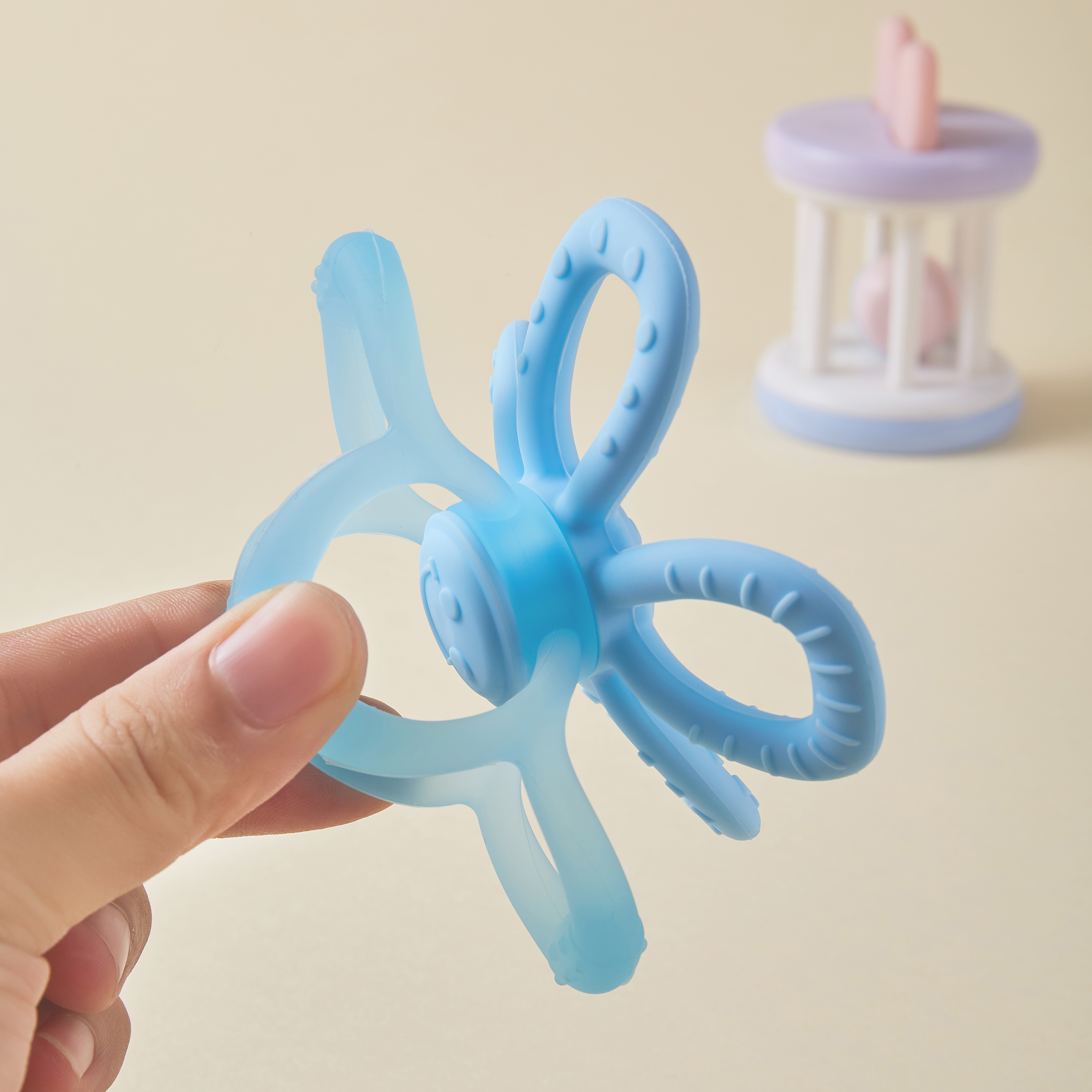
We must shift our focus from aesthetic appeal to strict material composition. Visuals matter for consumer interest, but toxic ingestion poses the primary danger. Chemical leaching remains a hidden, silent threat. You need absolute certainty regarding material purity.
You will frequently encounter the term silicone in modern products. However, not all silicone is manufactured equally. A genuine BPA-free silicone teether utilizes highly refined materials. We must differentiate between standard industrial silicone and safer, biocompatible alternatives. A 100% food-grade teething toy holds FDA approval for safe oral contact. Medical-grade silicone offers even higher purity standards. It undergoes intensive processing to remove volatile organic compounds.
You must actively reject certain chemical red flags. Watch out for these harmful substances during your material evaluation:
PVC and Phthalates: Manufacturers often use these plasticizers for flexibility in cheap plastics. They carry severe developmental risks and disrupt endocrine functions.
Latex: This natural material introduces unnecessary, potentially life-threatening allergen risks. Avoid it entirely for infant oral products.
Surface paints or superficial dyes: They pose significant risks of flaking. This deterioration can lead directly to heavy metal ingestion and lead exposure.
Cadmium and Lead: These toxic heavy metals sometimes contaminate cheap coloring agents. They cause irreversible neurological damage.
Take immediate evaluation action during procurement. Check for physical indicators of low-quality silicone. We highly recommend performing the standard "pinch test." Simply pinch and twist the silicone material firmly. If white fillers appear at the stress point, the silicone is compromised with cheap additives. Always demand up-to-date material safety data sheets (MSDS) from your suppliers. These sheets reveal the exact chemical composition.
We must address severe mechanical risks next. A chemically safe toy can still present fatal hazards. Improperly designed shapes introduce terrifying choking or strangulation risks. You must evaluate structural integrity rigorously. Physical design flaws often account for the majority of product recalls.
Choking and impaction hazards serve as critical evaluation points. The CPSC utilizes a standard "choke tube" test. This specialized cylinder roughly matches a small child's windpipe dimensions. It measures approximately 1.25 inches in diameter and 2.25 inches deep. Any part fitting completely inside fails the test immediately. Furthermore, we must discuss protective shield designs. Large shields require strategic ventilation holes. These precise holes prevent airway blockages if the toy becomes lodged in the mouth.
Tensile strength determines crucial long-term durability. Emerging teeth apply immense pressure on soft materials. Therefore, pull-testing requirements are incredibly strict. Testing labs often apply 15 pounds of tension force. We emphasize the superiority of seamless designs. One-piece injection-molded construction outperforms multi-part glued toys completely. Glued parts degrade rapidly and detach over time. This separation creates sudden, severe choking hazards. An effective infant gum relief toy must endure constant, aggressive biting without structural failure.
Audit the product's physical design closely. We recommend a strict checklist:
Search for any small detachable parts or decorative elements.
Measure all attached strings, ribbons, or pacifier clips. They must never exceed 7 inches to prevent strangulation.
Inspect the joint seams carefully. Reject weak joints. They will inevitably degrade under the intense pressure of chewing.
Test the material's rebound capability. It should snap back to its original shape after bending.
We must highlight a critical post-purchase failure point. Poor product architecture frequently causes severe bacterial contamination. Many visually appealing designs harbor dangerous mold colonies. You must evaluate how the item behaves after repeated, messy daily use.
Liquid-filled designs present specific, severe contamination risks. Sharp infant teeth can easily puncture thin plastic casings. Punctured liquid-filled teethers expose infants to stagnant, contaminated water. Regulatory agencies have noted these severe risks repeatedly. Consequently, we are seeing a major industry shift. Brands are moving toward solid, chillable alternatives. Solid silicone retains cold temperatures effectively. It provides numbing relief without introducing any puncture risks.
A fully compliant toy must withstand rigorous cleaning protocols. You must evaluate sanitization tolerances carefully. Assess the material’s ability to survive boiling water. It must also endure steam sterilizers, high-heat dishwashers, and modern UV sterilization devices. It should achieve this heavy cleaning without structural degradation, melting, or chemical breakdown.
Prioritize non-porous surfaces during your product evaluation. The best designs feature zero hidden crevices. Avoid products utilizing internal squeaker valves or hollow interiors. Saliva and moisture accumulate unseen in these dark spaces. This hidden moisture creates an ideal environment for toxic black mold. We advise implementing a "no-hidden-spaces" rule when approving new designs for retail.
This section specifically addresses professional retailers and large distributors. Sourcing teether toys wholesale carries massive financial liability. An opaque supply chain invites disastrous product recalls. You must maintain complete visibility over vendor compliance. Ignorance of factory conditions does not protect you from legal accountability.
Implement a strict supplier verification checklist immediately. Demand comprehensive factory audits upfront before signing contracts. Look for reputable manufacturing certifications like ISO 9001 for quality management. Check for BSCI certifications to ensure ethical labor practices. Additionally, you must require a unique CPC for each specific product variation. A safety certificate for a blue star shape does not cover a red star shape. Different chemical dyes alter safety compliance profiles entirely.
Ensure the manufacturer utilizes accurate batch testing continuously. Traceability remains crucial for rapid recall management. Check all retail packaging for clear, permanent date coding. Track batch numbers meticulously across your entire inventory system. This ensures you can isolate defective units immediately if an issue arises.
Take strategic evaluation action today. Shortlist wholesale suppliers who operate with total transparency. They should gladly publish their testing lab partners on their corporate websites. Seek vendors offering direct, secure channels for downloading regulatory documentation. Complete transparency indicates highly reliable manufacturing practices.
Purchasing or stocking infant chewing products requires deep vigilance. You must look far past clever marketing buzzwords like "eco-friendly." Strict verification separates genuinely safe products from dangerous liabilities. Always confirm ASTM and EN compliance through documented, unredacted lab reports. Prioritize material grade diligently, focusing solely on pure food-grade silicone over cheap plastics. Finally, verify physical integrity to eliminate choking hazards completely.
Consumers should take immediate, practical next steps. Cross-reference your product shortlists with official government recall databases. Websites like recalls.gov provide invaluable historical data on brand safety records. We strongly advise B2B buyers to initiate their procurement process strictly. Start by requesting a CPC upfront during initial vendor negotiations. Demand corresponding third-party lab reports before finalizing any purchase order. Protect your business and your end consumers through uncompromising standards.
A: Liquid-filled options carry significant risks. Emerging infant teeth can easily puncture the outer plastic casing. This directly exposes the infant to the contaminated, stagnant liquid hidden inside. Furthermore, they cannot withstand high-heat sterilization methods like boiling. We highly recommend solid, food-grade silicone as a much safer alternative. You can safely chill solid silicone products in the refrigerator. They provide excellent soothing relief without risking dangerous punctures or bacterial exposure.
A: Do not trust marketing claims blindly. You should formally request a Children’s Product Certificate (CPC) directly from the brand. Additionally, verify third-party lab testing results on the manufacturer's website. Reputable brands always publish compliance reports from accredited, independent testing labs like SGS or Intertek. If a company ignores your request or refuses to provide official documentation, choose a different, more transparent supplier immediately.
A: High-quality silicone sometimes retains a slight curing odor from the manufacturing baking process. This normal smell fades quickly after washing or boiling. However, a persistent, harsh chemical off-gassing indicates severe safety issues. It likely points to non-compliant plasticizers, PVC content, or cheap chemical fillers. If thoroughly boiling the product does not remove the smell entirely, discard the toy immediately to ensure infant safety.
A: Yes, wooden options can meet stringent safety standards. However, they require highly specific physical evaluations. Certified laboratories conduct rigorous tensile testing. They ensure the wood grain will not splinter under intense chewing pressure. Furthermore, you must verify the surface finishes carefully. Any applied coatings, such as natural beeswax or sealants, must be strictly 100% non-toxic and explicitly food-safe to prevent toxic ingestion.


