 English


Views: 0 Author: Site Editor Publish Time: 2026-08-05 Origin: Site


Pediatric care and childcare procurement constantly balance oral development, infection control, and feeding safety. You face a critical intersection when selecting the appropriate soothing tools for infants. Choosing the correct pacifier size requires precision and clinical awareness. Incorrect sizing often leads to severe dental malocclusion. It can trigger premature palate expansion or cause frustrating nipple confusion during early development. Furthermore, unverified antibacterial claims introduce hidden safety risks into neonatal environments. You need a reliable, evidence-based sizing framework. We must root these clinical decisions in trusted pediatric guidelines, such as those published by the AAP and AAPD. Rigorous material evaluation is equally important to support safe infant feeding protocols. In this guide, you will learn how physiological dimensions influence pacifier selection. We will explore essential material safety requirements. You will also discover actionable steps for vetting manufacturing partners and aligning your inventory with medical best practices.
Pacifier dimensions directly influence structural oral development. An oversized pacifier introduces immediate orthodontic risks. A shield or nipple larger than the infant's mouth forces unnatural tongue posture. This resting position applies undue pressure on the developing hard palate. According to AAPD physiological frameworks, prolonged abnormal pressure alters the dental arch. It can cause an anterior open bite or posterior crossbite. You must ensure the pacifier bulb fits comfortably without forcing the jaw into a distended position.
Conversely, undersizing presents severe choking and fatigue risks. Infants quickly outgrow their initial newborn pacifiers. When an infant uses a pacifier designed for a smaller oral cavity, the entire unit poses a choking hazard. The shield could bypass the lips and enter the mouth. Undersized nipples also cause significant jaw fatigue. The infant must overcompensate their latch to keep the pacifier stable. This overcompensation strains facial muscles and disrupts natural resting behaviors.
Premature infants require highly specialized sizing parameters. The NICU environment demands exact specifications. Premature infants lack mature suck-swallow-breathe coordination. Standard newborn pacifiers overwhelm their small oral cavities. NICU-specific pacifiers focus on minimal weight. They feature ultra-small nipple dimensions. This precise engineering accommodates underdeveloped facial structures. It prevents respiratory distress while encouraging non-nutritive sucking. This sucking action accelerates feeding tube weaning and promotes healthy weight gain.
Newborns require highly specific ergonomic designs. Stage 1 pacifiers feature a shorter nipple length and a narrower base. Manufacturers pair these elements with a lightweight shield. The primary focus is mimicking the natural elasticity of the maternal breast. This careful mimicry prevents triggering an overactive gag reflex. A newborn's oral cavity has minimal volume. Therefore, the pacifier must rest naturally against the hard palate. It should not stimulate the posterior pharyngeal wall.
Infants transition into a rapid growth phase after six months. Stage 2 designs accommodate a significantly larger oral cavity. The nipple volume increases proportionately. Manufacturers also utilize a higher shore hardness. This increased density provides essential bite resistance. Teeth begin erupting during this phase. A durable antibacterial baby pacifier withstands aggressive chewing. The antibacterial efficacy becomes crucial here. Teething infants produce excessive saliva. Silver ions embedded in the silicone continuously neutralize surface bacteria in this moisture-rich environment.
Toddlers possess fully erupted primary teeth and strong jaw muscles. Stage 3 pacifiers feature the widest base available. They prioritize maximum durability over extreme softness. The shields feature specific contours to accommodate larger facial profiles. This stage focuses heavily on the weaning transition. The structural integrity must withstand active, intentional chewing. If you supply childcare centers, you must ensure Toddler-stage pacifiers resist tearing. A compromised silicone nipple poses a severe ingestion hazard.
The following sizing comparison provides a standardized reference for clinical procurement:
| Stage Category | Age Range | Nipple Length | Shore Hardness | Primary Clinical Focus |
|---|---|---|---|---|
| Stage 1 | 0-6 Months | Short / Narrow | Very Soft (Low) | Gag reflex prevention, latch mimicry |
| Stage 2 | 6-18 Months | Medium / Voluminous | Moderate | Bite resistance, saliva management |
| Stage 3 | 18+ Months | Long / Wide Base | Firm (High) | Maximum structural integrity, weaning support |
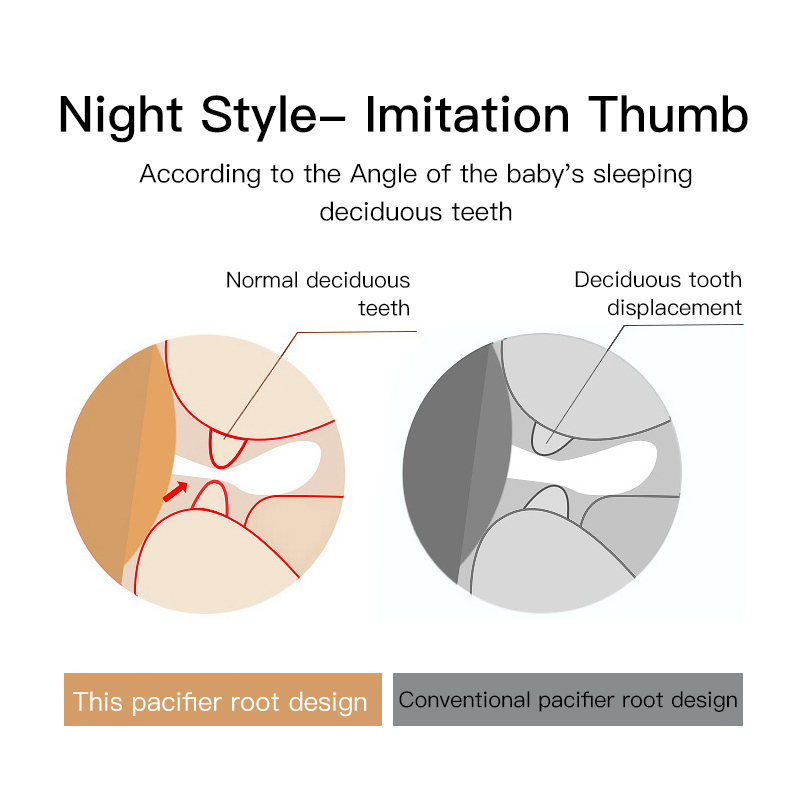
Feeding dynamics dictate pacifier selection. The base width of any infant feeding antibacterial baby pacifier must align closely with the infant's primary feeding method. Breastfed infants generally benefit from cylindrical or slightly anatomical shapes. These shapes require similar tongue cupping motions to breastfeeding. Bottle-fed infants often adapt easily to broader bases. Matching the pacifier base to the feeding nipple prevents latch disruption.
You must actively mitigate nipple confusion. The American Academy of Pediatrics (AAP) offers clear recommendations regarding this issue. They advise sizing the pacifier so it mirrors breast mechanics. It should never force a different tongue mechanism. Timing is equally important. The AAP recommends introducing pacifiers only after breastfeeding is firmly established. This typically occurs three to four weeks post-birth. Premature introduction of an incorrectly sized pacifier derails breastfeeding success.
Shape considerations directly interact with physical volume and size categories. You must evaluate these shapes critically:
Modern infection control demands clear technological definitions. You must understand the mechanism of action behind these devices. Genuine antibacterial baby pacifier specifications rely on embedded technologies. Manufacturers integrate silver ions or advanced nanotechnology directly into the medical-grade silicone during vulcanization. The silver ions continuously pierce bacterial cell walls. This halts microbial reproduction. You must avoid products relying on topical, degradable coatings. Coatings wear off rapidly during boiling and pose ingestion risks.
Adding antibacterial agents requires precise engineering to maintain ergonomics. We must address weight and flexibility trade-offs. The implementation reality is complex. Adding mineral-based antimicrobial agents can inadvertently increase the pacifier's overall weight. It can also reduce the nipple's natural flexibility. A heavy pacifier falls out easily, causing infant frustration. A stiff nipple alters latch mechanics. High-quality manufacturing ensures the antibacterial integration preserves the original silicone elasticity and weight limits.
We must maintain a skeptical, evidence-based stance regarding hygiene. You must balance efficacy claims against practical hygiene limitations. The term "antibacterial" means the surface reduces microbial load over time. It effectively suppresses Staphylococcus aureus and E. coli. However, it does not repel organic debris. It does not replace standard sterilization protocols. Saliva, milk residue, and environmental dust still accumulate on the shield. You must implement routine cleaning to maintain safety.
Procurement teams must establish strict regulatory baselines. You cannot compromise on infant safety standards. Evaluating a reliable antibacterial baby pacifier supplier requires comprehensive auditing. They must demonstrate FDA compliance for food-contact materials. They must meet stringent CPSIA standards regarding phthalates and lead. European markets require strict adherence to EN 1400 testing protocols. These protocols cover mechanical strength, chemical safety, and packaging requirements.
Marketing claims hold no clinical weight without verifiable efficacy data. You must request independent, third-party lab reports before finalizing any procurement contract. Look specifically for ISO 22196 certification. This standard measures the antibacterial activity on plastics and non-porous surfaces. The lab report should detail the log reduction of specific bacterial strains over a 24-hour period. A reputable manufacturer will provide these testing certificates transparently.
Clinical settings often require specific sizing adjustments. You might need to source a custom antibacterial baby pacifier for specialized pediatric programs. Customization involves modifying shield shapes to accommodate CPAP machines in neonatal units. It might involve adjusting the nipple shore hardness for infants with specific muscular hypotonia. Partnering with an agile manufacturer allows you to dictate exact physiological dimensions. This ensures the final product aligns perfectly with your specific therapeutic goals.
Sizing an antibacterial pacifier requires a meticulous balance of physiological dimensions, feeding protocols, and material safety. You cannot rely on chronological age alone. True anatomical fit prevents orthodontic damage and supports healthy latch mechanics. Furthermore, authentic antibacterial properties demand rigorous material integration and verifiable testing.
We advise clinical decision-makers and procurement managers to audit their current inventory immediately. Compare your stock against updated AAPD sizing guidelines. Discard products utilizing degradable surface coatings. Finally, request updated ISO 22196 antibacterial efficacy testing from your manufacturing partners to ensure ongoing compliance.
A: Look for signs of distinct latch fatigue. The infant may exhibit excessive milk spillage during subsequent breastfeeding sessions. If the infant constantly spits the pacifier out, it often indicates a gag reflex trigger caused by oversizing. Shallow breathing or cheek dimpling suggests the nipple is too short for their oral cavity.
A: Yes. You must adhere to standard clinical guidelines, such as Cleveland Clinic hygiene protocols. Antibacterial materials inhibit surface bacterial growth aggressively. However, they do not eliminate organic debris, milk residue, or viruses. Routine boiling or steam sterilization remains mandatory for safe infant care.
A: Weight serves as a helpful indicator, but oral cavity size dictates the fit. Gag reflex maturity is the ultimate deciding factor. Observe the physical fit of the shield against the nose and lips. If the shield touches the nose or restricts breathing, delay the transition regardless of the infant's weight percentile.


